
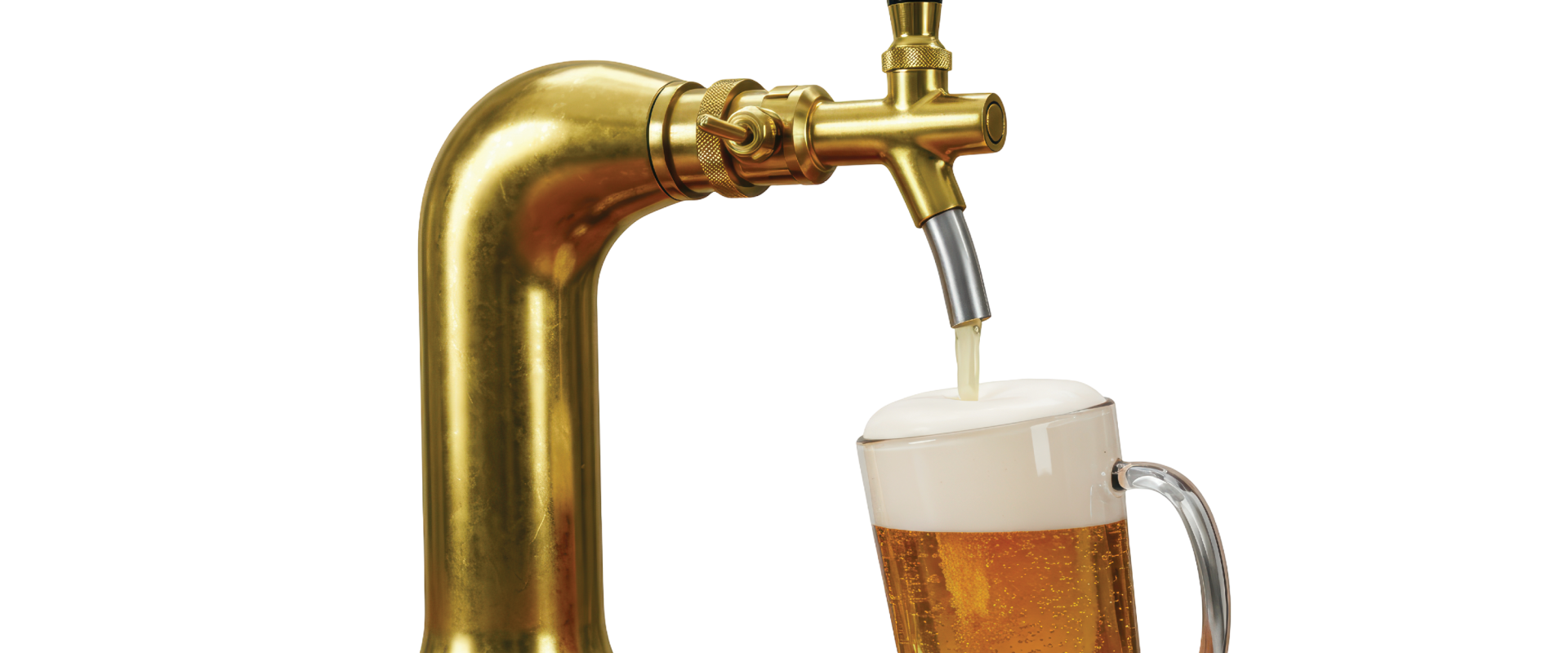
Choosing the right beverage dispensing valve starts with five primary factors to initially consider: flow rate and orifice size, operating pressure, voltage and coil configuration, wetted material compatibility, and certification requirements for the media being dispensed. Getting any one of these wrong can mean inconsistent pour volumes, premature valve failure, or a redesign late in your development cycle.
For OEM engineers designing coffee brewers, soda fountains, juice dispensers, and similar beverage equipment, the dispensing valve is one of the few components that directly affects both product and long-term reliability. This guide walks through what to check before you specify a valve for your next design, and where Deltrol's dispensing valve line fits each scenario.
What Is a Beverage Dispensing Valve?
A beverage dispensing valve is a solenoid-operated device that starts and stops the flow of water or another compatible beverage media in response to an electrical signal. In a typical on/off system, the equipment controller determines the dispense time, while system pressure, valve flow characteristics and fluid properties influence the amount delivered. Dispensing valves are designed for reliable cycling and repeatable flow performance within their specified operating range. Final dispense accuracy depends on the complete fluid system and control method.
5 Factors to Check Before You Specify a Valve size
Flow Rate and Orifice Size
Flow rate determines how quickly a valve fills a cup or completes a dispense cycle. Beverage equipment designers typically work backward from a target fill time and volume, then match that to a valve's rated flow at the system's operating pressure. Orifice size and internal flow path geometry, not just port size, drive this number, so two valves with identical fitting sizes can have meaningfully different flow rates. Always confirm flow rate against the specific model's datasheet rather than assuming it scales linearly with port size.
Operating Pressure
Dispensing valves are generally built for low-pressure, gravity-fed systems while pilot-operated high-pressure (HP) versions handle line pressure up into the tens of psi. Specifying a valve rated below your system's actual line pressure is one of the most common causes of premature failure or a valve that won't fully seat. If your beverage system runs on line pressure rather than a gravity-fed tank, an HP or pilot-operated design is usually the right starting point.
Voltage and Coil Configuration
Beverage dispensing valves are available in common AC and DC voltages, including configurations designed around the equipment’s control system. Duty cycle matters here too — confirm whether your application needs continuous or intermittent coil energization, since that affects coil life and heat buildup.
Wetted Material and NSF Certification
The wetted parts, anything touching the beverage, should be selected for compatibility with the fluid, temperature, and any cleaning chemicals used in service. Common combinations include stainless steel or engineered polymer valve bodies with EPDM, Buna-N, or FKM seals and diaphragms. For potable-water and beverage applications, identify the certifications required for the finished equipment and verify that the selected valve model carries the applicable approvals. Depending on the application, these may include NSF certification to an applicable food-equipment or drinking-water standard, along with UL or other regional approvals.
CO2 and Carbonated Media Compatibility
Carbonated beverage lines introduce additional considerations: seal materials need to hold up to CO2 exposure over time, and valve geometry needs to avoid introducing turbulence that causes premature off-gassing or foaming. Rather than adapting a standard dispensing valve, it's worth reviewing Deltrol's carbonated water dispensing valve line, which is purpose-built for these conditions, before defaulting to a standard model.
Standard vs. Proportional Dispensing Valves
Most beverage applications use standard on/off dispensing valves where the coil is energized, the valve opens fully, and dispense time controls volume. When the application is precision carbonation, blended drinks, or multi-flavor systems, it may require a variable flow rather than a fixed rate. A proportional dispensing valve uses a variable control signal to modulate flow to a specific degree, rather than simply opening or closing, to hit your tolerance target.
Common Specification Mistakes
- Sizing to port diameter instead of rated flow. Two valves with the same fitting size can flow very differently
- Specifying standard-duty coils for continuous-run applications, shortening coil life
- Skipping the check on certifications required for materials touching potable water or beverage products
- Overlooking scale and debris sensitivity in hard-water regions. Smaller orifices clog faster and need a filtration or maintenance plan
Rule of thumb: For a gravity-fed system, calculate the available pressure from the liquid height and include any downstream restrictions. For a pressurized system, identify both normal and worst-case inlet pressure. Then select a valve whose operating-pressure range, flow capacity and allowable backpressure match those conditions. Everything else —voltage, materials, certification — gets layered on top of that first decision.
Additional Considerations for Specifying a Valve
While these primary factors are a good starting point, there are many additional elements to consider, including:
- Minimum, normal & maximum inlet pressure
- Downstream pressure & possible back pressure
- Fluid temperature & ambient temperature
- Viscosity & particulate content
- Flow tolerance, not only nominal flow
- Response time & required dispense repeatability
- Normally open or normally closed operation
- Port orientation & mounting
- Noise requirements
- Cleaning & sanitation procedures
- Expected cycle life
- Leakage requirements
- Filtration
Working With Deltrol on Your Next Design
Deltrol Controls has designed dispensing valves for OEM beverage, ice, and floor scrubber equipment manufacturers for more than 50 years, with in-house engineering support for custom orifice sizing, coil configuration, and material selection. Browse the full dispensing valve lineup, or contact Deltrol's engineering team with your flow rate, pressure, and fluid requirements to start a custom design conversation.