
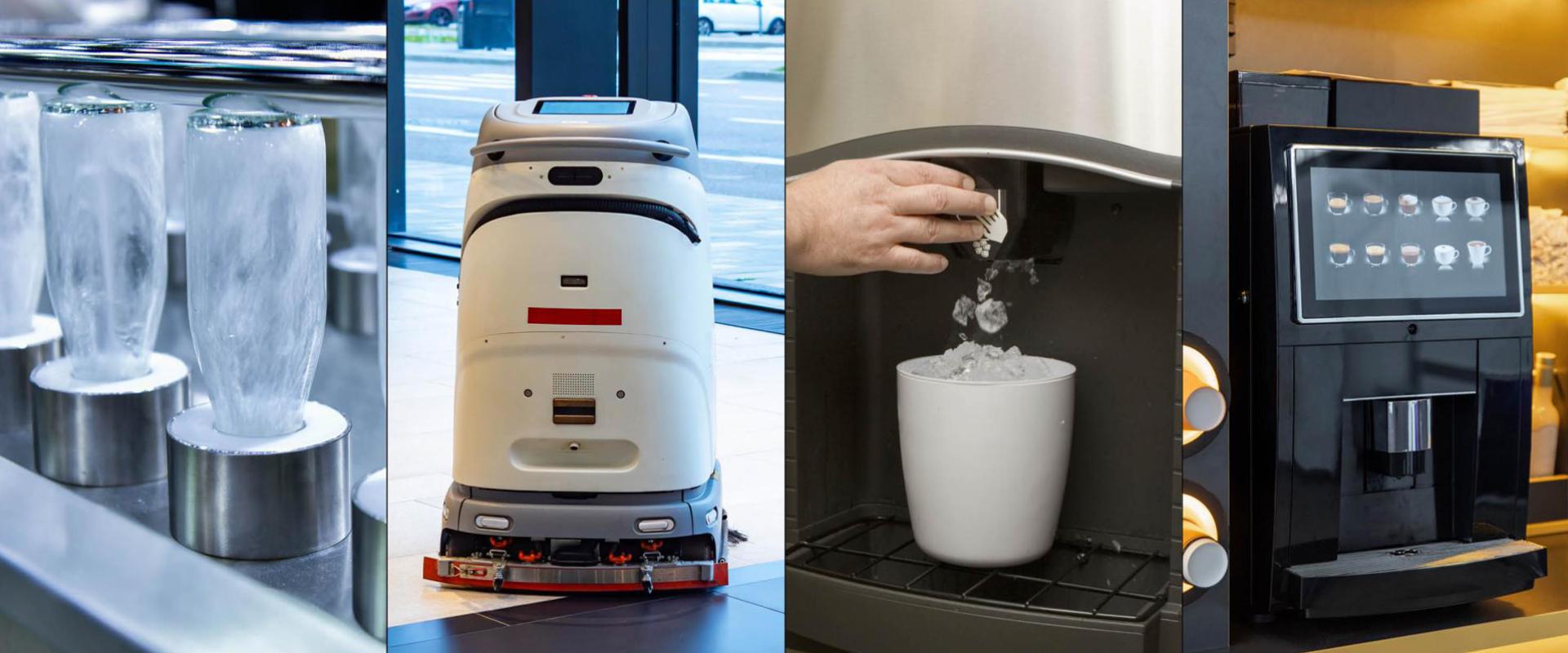
What Is a Dispense Valve? Types, Applications & How to Choose
If you're specifying fluid control components for OEM equipment, understanding dispense valves — what they do, how they differ, and what to look for when selecting one — is fundamental to getting your design right the first time.
This guide covers the essentials: how dispense valves work, the most common types, the industries they serve, and the key criteria engineers use to evaluate and specify them.
What Is a Dispense Valve?
A dispense valve is a fluid control component that starts, stops, or meters the flow of a liquid through a system. In OEM equipment, dispense valves manage the precise delivery of water, syrup, cleaning solutions, and other media — typically at low to moderate pressures.
Unlike high-pressure industrial valves, dispense valves are engineered for accuracy and repeatability in cyclic, high-use environments. A commercial coffee machine may open and close its dispense valve thousands of times per day. A floor scrubber's valve needs to deliver a consistent volume of cleaning solution for the life of the machine. Failure or drift in either application has direct downstream consequences — wasted product, inconsistent output, or equipment downtime.
Dispense valves are sometimes called dispensing valves, fluid dispense valves, or (when solenoid-actuated) solenoid dispense valves. The terms are used interchangeably in most engineering contexts.
How Does a Dispense Valve Work?
Most dispense valves used in OEM equipment are solenoid-operated: an electromagnetic coil generates a magnetic field that lifts or moves an internal plunger, opening or closing the valve seat and allowing fluid to pass.
When the coil is energized, the plunger moves — either opening a normally closed valve or closing a normally open one. When power is removed, a return spring moves the plunger back to its resting position.
This on/off actuation is fast, repeatable, and controllable by any electrical signal, making solenoid-operated dispense valves the standard choice for automated OEM equipment designs.
Some applications require proportional control — where the valve modulates to a precise intermediate position rather than switching fully open or closed. Proportional dispense valves use a different actuation mechanism to achieve variable flow rates in response to a control signal.
What are the Different Types of Dispense Valves?
Solenoid-Operated Dispense Valves
The most common type. An electromagnetic coil actuates a plunger to open and close the valve. Available in normally closed (NC) or normally open (NO) configurations.
Best for: High-cycle applications, automated equipment, anywhere electrical control is required.
Typical applications: Beverage dispensers, coffee machines, ice makers, vending machines, commercial dishwashers.
Pilot-Operated Dispense Valves
In pilot-operated (or servo-assisted) designs, the inlet fluid pressure itself does most of the work opening the valve. A small solenoid controls a pilot orifice that allows pressure to act on a diaphragm, which in turn opens the main flow path. This design allows a low-power coil to control high flow rates.
Best for: Applications where flow rates are high or pressure differentials are available.
Note: Pilot-operated valves require a minimum operating pressure differential to function correctly — a constraint worth confirming during spec.
Direct-Acting Dispense Valves
The solenoid plunger directly opens and closes the valve seat without relying on fluid pressure. This allows operation from zero pressure differential — a critical feature for gravity-fed or low-pressure systems.
Best for: Low-pressure applications, systems where pressure may be zero at startup.
Typical applications: Floor scrubbers, dispensing equipment with gravity-feed reservoirs.
Proportional Dispense Valves
Proportional valves use variable electromagnetic force to position the plunger at any point between fully open and fully closed, enabling precise flow control. A control signal (typically 0–10V or 4–20mA) adjusts the valve position in real time.
Best for: Applications requiring variable flow rates, precise dosing, or closed-loop flow control.
Typical applications: Beverage dispensing with multiple mix ratios, precision fluid dosing in medical and laboratory equipment.
Multi-Port Dispense Valves
Multi-port designs route a single inlet to multiple outlets — or multiple inlets to a single outlet — within one valve body. This reduces the number of components in a system and simplifies plumbing for equipment with multiple dispense points.
Best for: Dispensing equipment with multiple flavor or media paths, vending machines.
Where Are Dispense Valves Used?
Dispense valves appear in virtually any OEM equipment that handles fluids. The most common end markets include:
Beverage Equipment
Commercial coffee equipment, espresso machines, beverage dispensers, and water purification systems all rely on dispense valves to deliver precise volumes of water at controlled temperatures. Valves must be compatible with potable water, meet NSF certification requirements, and withstand high cycle counts over the equipment's service life.
Ice Machines
Commercial ice machines use water inlet and dispense valves to control the flow of water into the freezing zone. Valves must handle hard water conditions without buildup degrading performance, and must meet NSF and UL requirements for food equipment.
Floor Scrubbers
Industrial and commercial floor scrubbers use dispense valves to meter cleaning solution from an onboard tank to the brush deck. These applications typically run at low pressure, require direct-acting valve designs, and demand long service life under constant use.
Vending Machines
Hot and cold beverage vending equipment uses dispense valves for water and syrup delivery. Multi-port configurations are common, as a single machine may offer multiple beverages from a shared water supply.
Medical Equipment
Diagnostic and laboratory equipment uses dispense valves for precise fluid delivery in reagent dispensing, sterilization, and sample handling. These applications often require materials compatibility with aggressive chemicals and strict documentation for regulatory compliance.
HVAC and Refrigeration
Commercial refrigeration equipment uses solenoid valves to control refrigerant and water flow. Dispense valves in this context must handle the thermal cycling and refrigerant compatibility requirements specific to the application.
What is the difference between a dispense valve and a solenoid valve?
All dispense valves are solenoid-actuated, but not all solenoid valves are designed for dispensing. A standard solenoid valve controls flow in a line (on/off), while a dispense valve is specifically engineered for precise volume delivery — often with low-pressure drop designs, food-grade materials, and tight tolerances for repeatable shot sizes. Deltrol's dispense valves are optimized for OEM equipment where consistent portion control matters.
What materials are dispense valves made from?
Dispense valve wetted parts (the surfaces that contact the fluid) are typically made from materials selected for compatibility with the fluid being dispensed. Common materials include stainless steel for the valve body, EPDM or Buna-N (nitrile) for seals and diaphragms, and polypropylene or brass for fittings. For food and beverage applications, NSF-certified materials are used. Deltrol can specify material combinations to suit your fluid type, temperature range, and pressure requirements.
What voltages are dispense valves available in?
Deltrol dispense valves are available in both AC and DC voltages. Common AC options include 24VAC, 120VAC, and 240VAC. Common DC options include 12VDC and 24VDC. The right choice depends on the power supply in your equipment. DC solenoids are generally preferred for battery-powered or electronically controlled equipment, while AC is common in line-powered appliances. Custom voltages can be wound to order.
What pressure range do dispensing valves operate at?
Deltrol dispense valves are available for low-pressure to medium-pressure applications, typically in the range of 0.5 to 150 PSI depending on the model. Beverage dispensing applications commonly operate at 20–80 PSI. Always confirm the operating pressure range with the specific model datasheet, and ensure the valve is not operated at zero differential pressure if it requires a minimum pressure to open.
Are Deltrol dispense valves NSF certified?
Select Deltrol dispense valve models are designed and available with NSF/ANSI 61 certified materials for use in potable water and food/beverage contact applications. Contact Deltrol to confirm which models carry NSF certification and whether they meet the requirements for your specific application and jurisdiction.
Can Deltrol dispense valves be customized for my OEM application?
Yes. Deltrol has over 50 years of experience designing custom dispense valves used in commercial beverage equipment, floor care equipment, medical devices, and HVAC applications. Custom options include: orifice size and flow rate, voltage and coil configuration (AC or DC), port size and fitting type, seal and body material selection, mounting configuration, and operating pressure range. To start a custom design discussion, contact Deltrol's engineering team with your flow requirements, fluid type, operating pressure, and space envelope.
Choosing the right dispense valve requires balancing flow rate, operating pressure, media compatibility, voltage, cycle life, and regulatory requirements. Deltrol engineers work directly with OEM manufacturers to develop standard and custom fluid control solutions for beverage equipment, floor care machines, medical devices, HVAC systems, and other demanding applications. Explore our dispensing valve product line or contact our engineering team to discuss your application.